
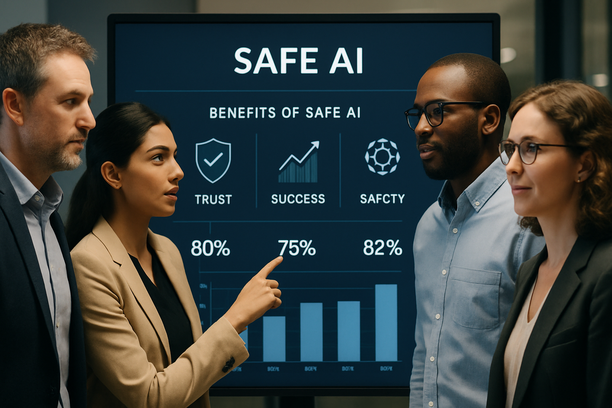
Understanding Safe AI: Foundations and Importance
Safe AI means designing and using artificial intelligence so it works reliably and fairly without causing harm. In today’s world, where AI is becoming integrated into many technologies and daily activities, safe AI is essential to protect people’s privacy, prevent mistakes, and build trust in these systems.
The significance of safe AI lies in its ability to help businesses and individuals use AI confidently. Without safety, AI systems can make wrong decisions, show bias, or mishandle sensitive information, potentially leading to serious consequences. In critical sectors such as healthcare and finance—where decisions affect lives and money—AI must be built and monitored carefully to ensure safety.
Foundational principles of safe AI practices include fairness, transparency, privacy, and accountability. Fairness ensures AI treats everyone equally without bias, while transparency means people can understand how AI makes decisions. Privacy protects personal data from misuse, and accountability means someone is responsible if the AI causes harm or makes mistakes. These principles guide developers and organisations in building AI systems that not only perform well but also uphold ethical standards.
The journey toward truly safe AI involves thoughtful design, ongoing monitoring, and human oversight. It’s more than technology; it’s about creating AI that supports humans and respects societal values. Companies with deep expertise in safe AI practices, like FHTS, play a key role for businesses seeking to adopt AI confidently. Their experienced teams focus on these principles to build AI solutions that work well and stay safe over time.
By prioritising safe AI, organisations can unlock AI’s powerful benefits while reducing risks, making technology a positive force for everyone.
For further details on safe AI principles and frameworks, resources like FHTS’s Safe and Smart Framework offer valuable insights into responsible AI design and implementation.
Source: FHTS – What is the Safe and Smart Framework?
The Stakeholder Perspective: Who Benefits and Why
Different groups of people are affected by and have an interest in AI safety. Understanding who these stakeholders are and what safe AI means for them helps create better collaboration toward building and using AI responsibly.
Business leaders make strategic decisions about adopting AI technologies. Safe AI helps them protect their companies from risks like errors, biases, or privacy breaches that could harm reputation and trust. It also unlocks AI’s potential to improve productivity and customer service without unexpected harm or legal issues. For example, companies partnering with trusted experts following proven safety frameworks can confidently integrate AI solutions with managed risks.
Developers and AI engineers build these intelligent systems. Safe AI practices guide them to create models that are fair, transparent, and reliable. This means using quality data, thorough testing, and continuous monitoring once AI is deployed. Following these principles helps avoid “black box” systems that are difficult to explain or audit, benefiting users and businesses alike.
Regulators play a vital role in setting standards and rules to ensure AI is used ethically and safely. They require clear information about AI’s workings and risks to formulate informed policies. Safe AI fosters trust with regulators by demonstrating respect for privacy, bias prevention, and human oversight, facilitating innovation while protecting public interest.
End-users, daily interactors with AI-powered apps and services, gain the most direct benefits from AI safety. Safe AI means technology treats users fairly, secures their data, and supports their needs without causing harm, increasing user adoption and trust which drives ecosystem success.
Each stakeholder group offers a unique perspective on AI safety. Effective implementation depends on engaging all voices. Experienced teams like those at FHTS help organizations build AI systems addressing diverse needs while prioritising ethical standards and risk management. This balanced approach maintains AI’s power and trustworthiness across all usage levels.
More insights on frameworks supporting responsible AI innovation and practical integration of safety principles can be found in resources on safe AI development and deployment. Safe AI is a collective responsibility among leaders, creators, regulators, and users to build a future where AI serves everyone well.
Source: FHTS – Safe and Smart Framework
Communicating the Value of Safe AI: Strategies and Best Practices
Communicating the importance of investing in safe AI is crucial for gaining stakeholder support and ensuring responsible deployment. A clear strategy involves explaining safe AI in simple terms — emphasising trustworthy, transparent, and fair AI system design. Analogies stakeholders understand, such as AI safety compared to safety features in cars or medical devices, illustrate that this investment is critical, not optional.
Sharing real-world examples where unsafe AI caused problems (biased decisions, privacy breaches) highlights potential risks of ignoring safety, making the need for investment concrete. Visual aids like infographics showing cost savings from avoiding AI errors or reputational damage further motivate stakeholders.
Early involvement of stakeholders by inviting their input and addressing concerns builds trust and respects their perspectives. Framing investment in safe AI as a strategic move that protects reputation, complies with regulations, and opens innovation opportunities makes it relevant to business goals.
Expert partners play a vital role in these communications. Trusted experts with deep experience in safe AI design and deployment provide credible guidance, ensuring messaging aligns with best practices and enhances confidence. Teams combining technical knowledge with clear communication, such as FHTS’s experts, are well positioned to help organizations frame these conversations effectively, balancing innovation with risk avoidance.
For further insights on responsible AI practices and frameworks, consult detailed sections on safe AI principles and strategies at FHTS’s site. Clear, credible communication paired with expert support lays a solid foundation for successful safe AI adoption fully supported by stakeholders.
[Source: FHTS]
Overcoming Challenges: Addressing Concerns and Misconceptions
Worries and misunderstandings about AI safety are common given AI’s growing role in everyday life and work. Listening to these concerns helps build confidence for wise AI use.
One frequent concern is that AI might make unnoticed mistakes. This can happen if AI learns from biased or incorrect data, causing wrong decisions. Addressing this requires continuous performance monitoring, akin to checking a car before a trip. Experts recommend continuous monitoring systems combined with human oversight to catch errors early and maintain trustworthiness.
[Source: FHTS]
Fairness and bias is another concern, with fears that AI could treat certain groups unfairly due to hidden prejudices in data. To mitigate this, AI systems must be transparent and explainable, allowing people to understand why decisions were made. Lawmakers and developers are establishing ethical guidelines and fairness checks to ensure AI respects everyone equally.
[Source: FHTS]
Privacy concerns focus on AI collecting excessive personal information or data exposure risks. Privacy-by-design principles are best practice, protecting data and enabling learning without compromising security—like locking personal diaries safely. Companies adopting such practices respect user privacy and build stronger trust.
[Source: FHTS]
Some fear that AI will replace humans entirely, causing job losses or loss of control. The reality is that the best AI systems collaborate with humans, handling repetitive or complex tasks faster and freeing humans to focus on creativity, judgment, and empathy. This collaboration results in smarter, safer outcomes with human oversight central.
[Source: FHTS]
Effective communication is essential to manage concerns: using simple language, candidly explaining AI’s limits, and showcasing safe AI examples dispel fears. Engaging all stakeholders early fosters understanding and cooperation.
Organisations benefit greatly from guidance by experienced teams specialising in safe, fair, transparent AI system building. Expert oversight and thoughtful processes help navigate the complex safety landscape, reduce risks, and support informed decision-making ensuring AI adds value without unintended harm.
By acknowledging common fears, addressing them with facts and practical strategies, and working with knowledgeable partners, stakeholders can confidently advance safe and respectful AI technologies.
Building a Culture of Responsibility: Next Steps for Stakeholders
Fostering a culture of AI responsibility and safety is vital for harnessing AI’s power while protecting people and values. Practical steps for stakeholders include:
1. Lead With Commitment
Senior leadership must clearly communicate the importance of safe and ethical AI, setting a tone that encourages organisational-wide dedication to AI safety.
2. Educate and Train Teams
Regular training for all—from developers to business leaders—on AI opportunities, risks like bias, and responsible use helps teams make informed daily decisions.
3. Involve Diverse Perspectives
Including varied backgrounds and departments in AI planning uncovers blind spots, nurturing fairness and transparency while avoiding narrow or harmful outcomes.
4. Establish Clear Policies and Frameworks
Develop guidelines outlining your organisation’s definition of safe AI. Frameworks provide guardrails for design, testing, deployment, and monitoring, simplifying accountability and oversight.
5. Monitor and Review Continuously
AI systems can evolve in behaviour; ongoing monitoring for performance, fairness, and privacy ensures alignment with organisational values. Review enables quick response to issues.
6. Encourage a Culture of Curiosity and Openness
Create an environment where employees feel safe to raise questions or concerns about AI tools. Openness fosters balanced innovation and responsibility.
7. Partner with Experienced Experts
Engage specialists with proven safe AI experience to navigate complexities, avoid common errors, and tailor sustained safety guidance.
Integrating these steps not only reduces AI risks but also builds trust with employees, customers, and the wider community—essential in a world increasingly shaped by intelligent technologies.
For organisations advancing their AI journeys, steady guidance from skilled teams knowledgeable in safe AI principles makes a significant difference. Responsible AI is an ongoing commitment, and expert partners help maintain focus and adapt to new challenges.
Explore further insights on responsible AI frameworks and practical safety approaches at FHTS’s website, where expert knowledge merges with real-world applications supporting secure organisational growth in the AI era.
Learn about frameworks for building AI with trust and responsibility | Discover why agile practices combined with safe AI principles enhance project success
Sources
- FHTS – AI Can Make Mistakes: Why Vigilant Oversight Is Essential
- FHTS – What is Fairness in AI and How Do We Measure It?
- FHTS – What is the Safe and Smart Framework?
- FHTS – Why Combine Agile Scrum with Safe AI Principles
- FHTS – Why Humans and AI Should Collaborate for a Better Future
- FHTS – Why Privacy in AI is Like Locking Your Diary

